Scientists have long acknowledged that human beings are built for staying power, with our surprise-soaking-up joints and springy tendons. A brand new look suggests human beings’ hearts are also optimized for endurance, though how plenty depends on whether we run, farm, or live on the couch. To get to the coronary heart of the problem, researchers used ultrasound imaging to examine the hearts of more than 160 grown-up men from 4 groups: long-distance runners, sedentary adults, notably skilled football linemen, and the Tarahumara, Native American farmers, who are famous for their going for walks capability. In contrast, additionally, they checked out the hearts of forty-three grown-up male chimpanzees—one of our closest evolutionary cousins.
When researchers in comparison the thickest of the heart’s 4 chambers—the blood-pumping, strawberry-shaped left ventricle—there were clear variations. Endurance runners and farmers had large, elongated ventricles with thin walls—traits that assist in pumping huge volumes of blood for a long time, the researchers filed these findings in the Proceedings of the National Academy of Sciences. The linemen, whose training emphasized quick, excessive-depth exercising, had shorter, wider ventricles with thicker partitions. So did the sedentary people. The chimps, whose important sports are brief bursts of high-depth exercise like climbing or mountain climbing, had the shortest, thickest ventricles.
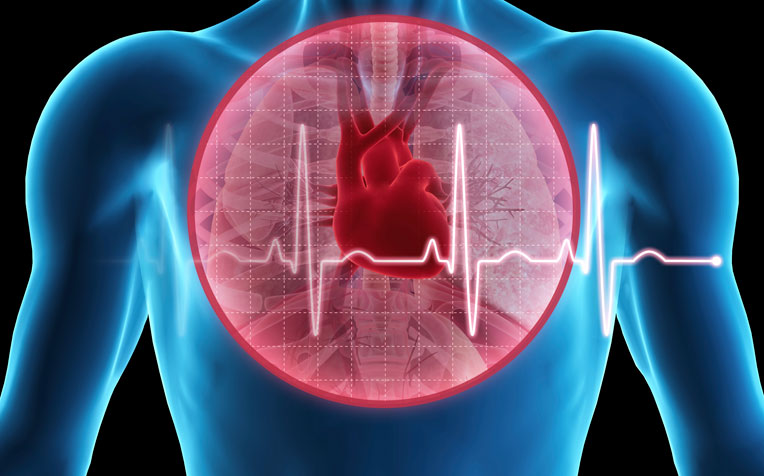
Because excessive-depth pastime reasons blood pressure inside the arteries to surge for a brief amount of time, such small chamber volume, thick walls, and rounder shapes are beneficial to the linemen and chimps, researchers say, by ensuring sufficient blood continues to be flowing to the brain to maintain recognition. But even without those evolutionary pressures, a sofa potato lifestyle appears to result in the same sort of thickening.
Adaptations for patience possibly helped our early hunter-gatherer and farming ancestors. But they could have also caused fewer parallel diversifications for issues like excessive blood pressure and cardiovascular disorder, issues that run rampant in today’s industrial societies. Ironically, therefore, the researchers advocate that those early staying power adaptations can also have made it more difficult for modern-day populations to deal with hypertensive coronary heart disease. But sedentary readers shouldn’t feel heartbroken—the researchers emphasized that modifications in coronary heart shape are possibly reversible, including endurance sports like distance running and swimming over a few years. That’s one way to undergo a trade of hearts.

