Wallabies coach Michael Cheika made a key positional switch in their beginning World Cup game against Fiji in Sapporo, which not only helped them come from in the back to win but can be a crucial pointer for the rest of the event. It turned into the subtle shifting of James O’Connor to the inner-center and Samu Kervi to the outside-center that helped the Wallabies to gain composure in attack.
In the Wallabies’ build-up to the World Cup, their new attacking style of play in large part revolved around the effective Kerevi crashing over the advantage line to create momentum. But the Wallabies did not use Kerevi as a battering ram in opposition to Fiji, as a minimum now not from the set pieces. Instead, they attempted to play an up-tempo game, the use of the width of the field.
The hassle changed into the Wallabies’ ball-dealing with abilties did not help their ambition. In the first half, so many balls went to the ground from bad passing and catching, undermining their sports plan. Cheika’s plan was for the Wallabies to govern sixty-five in line with a cent of ownership. They surpassed that objective with 69 percent of the ball inside the first-1/2 but still trailed 14-12 to an exceedingly disciplined and spirited Fijian side.
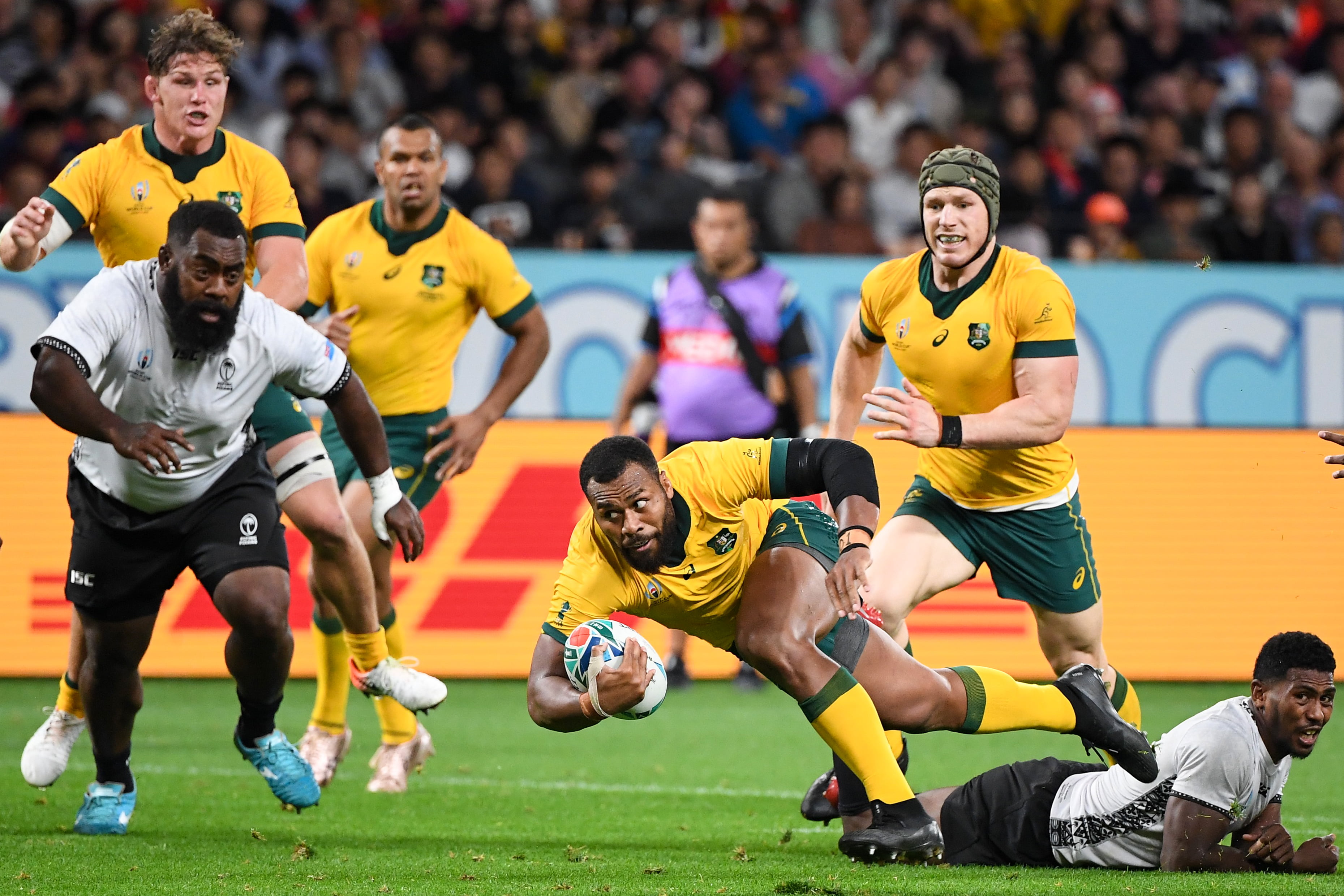
It was a very sloppy first forty minutes of using the Wallabies, with their scrum the best thing preserving them in the game. Early in the second half of the Fijian outdoor center, Waisea Nayacalevu scored a try and placed the Pacific Island country 21-12. The Wallabies had been under real threat of dropping a pool sport for the first time in World Cup records and making a shock early exit. The try originated from any other coping with errors by the Wallabies. From a lineout win simply on the Fijian aspect of midway, the Wallabies took the ball right into a maul and rolled it ahead before executing a rehearsed move.
Halfback Nick White passed to Kerevi at first receiver, and he took the ball to the benefit line. When Kerevi grew to become to bypass, he pondered in his mind whether to give it to O’Connor, who appeared to be a decoy, or out the back to five-eighth Christian Lealiifano. As a result, the ball went to the ground, where it changed into scooped up by Nayacalevu, who raced half the length of the field to score. By no means did Kerevi, the most effective player, throw a bad bypass or drop the ball. However, the Wallabies needed to get their ball-coping together, especially if they desired to head extensively. Cheika answered by switching Kerevi and O’Connor around, a circulate that resulted in the centers gambling in positions that are extra natural to them.
Until this year, Kerevi spent the sizable majority of his career for the Queensland Reds and the Wallabies at the outdoor center, at the same time as the utilitarian O’Connor played a variety of inside-center early in his career for the Western Force. The essential difference between Kerevi and O’Connor as ball vendors is that the former is an off-loader, and the latter is a passer. With playmakers within the internal backs, the Wallabies were capable of shifting the ball wide without making quite as many coping with errors and have been capable of capitalizing on their dominance of possession and territory, progressively grinding the Fijians into submission.
Kerevi still made lots of runs and gained plenty of meters. He scored an attempt within the 68th minute after taking a pass from Will Genia before everything was gained from a ruck 5 meters from the Fijian line and beating the defense effortlessly. But if the Wallabies want to play a huge recreation, they want the ball in the hands of ball-players to shift it quickly. In one of the Wallabies’ tries scored on the edges, it changed into thrilling to notice that Kerevi was not at once worried. Winger Reece Hodge scored inside the right-hand corner in the 35th minute. From a ruck, 5 meters out from the Fijian line, White exceeded Lealiifano, who cut out Kerevi with an extended ball, to O’Connor, who connected with fullback Kurtley Beale to place Hodge over.
The Wallabies’ Fijian-born winger Marika Koroibete scored a try in the 71st minute that wrapped up the game at 39-21. The attempt featured Australian captain and openside flanker Michael Hooper reprising his long-ago position as an interior center for the Sydney membership Manly. From a lineout win, the ball went through the palms of substitute 5-eighth Matt Toomua, Hooper, O’Connor, and reserve fullback Dane Haylett-Petty to Koroibete, who flew down the touchline. In each trial, the ball was transferred quickly to the quick men on the brink.
The Wallabies had a tactic to transport the ball around to tire the Fijians, banking on their superior health within the final 20 to an hour of the game. The bench players, or finishers, as Cheika likes to name them, did a good job at the stop, but the momentum was already swinging back to the Wallabies. The question is, will the Wallabies appear to adopt comparable procedures to their blockbuster pool game against Wales next Sunday? The Australians are fortunate to have centers that can interchange and vary the attack. If they want to play direct, Kerevi can take the ball up at interior center, but they can use O’Connor’s passing talents at 2nd receiver if they want to go extensive.
